The overwhelming majority of residential burglaries in Texas happen in daylight, on a weekday, through an unlocked or lightly secured door, while everyone who lives in the house is at work or at school. Nobody wears a mask. Nobody breaks a window if a door will do. The whole thing takes between eight and twelve minutes, and the person doing it would very much prefer to look like a delivery driver, a lawn guy, or somebody who took a wrong turn.
We have been responding to alarm signals across Bexar County and up and down the I-35 corridor for more than a decade. What follows is not a marketing document dressed as research. It is the pattern our technicians see, repeated so consistently that we now plan installations around it.
The hours that matter
The window is roughly ten in the morning to three in the afternoon. That is not a coincidence and it is not a preference — it is a consequence of a simple calculation that anyone considering entering an occupied structure performs whether or not they could articulate it: the single greatest risk is running into a person.
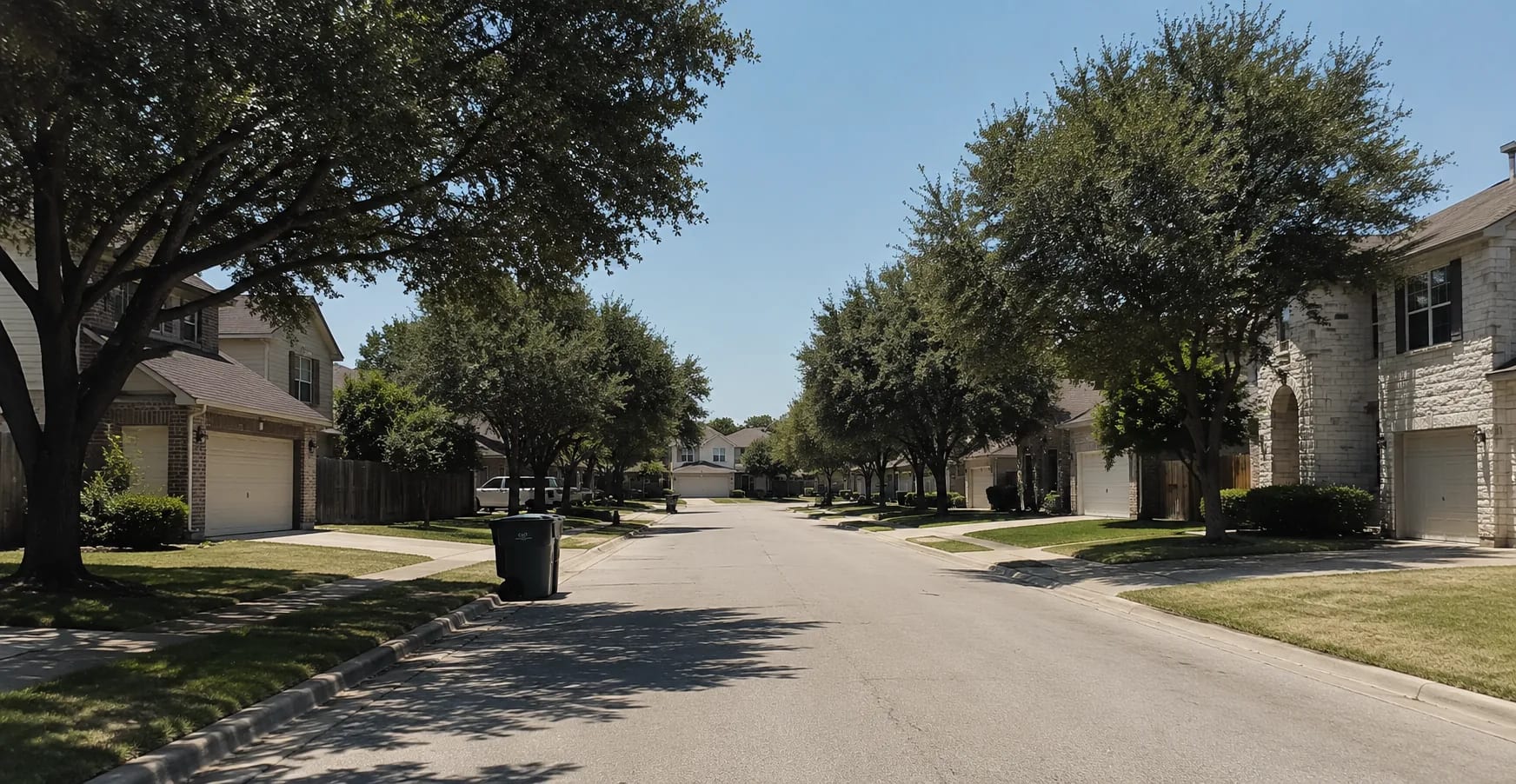
At 2 a.m., every house on the street is occupied. Everyone is home. Some of them are awake. In Texas, a meaningful percentage of them own a firearm and have thought seriously about the circumstances under which they would use it. At 11 a.m., the street is empty. The commuters left at seven. The school run finished at eight. The retirees are at H-E-B. The only reliable traffic is a mail carrier and the occasional package van, and if you look like a package van, you are invisible.
| Time window | Share of residential alarm events | Typical entry point |
|---|---|---|
| 10 a.m. – 3 p.m. weekday | Roughly 6 in 10 | Rear or side door, garage |
| 3 p.m. – 8 p.m. | Roughly 2 in 10 | Garage left open, front door |
| 8 p.m. – 6 a.m. | Fewer than 2 in 10 | Rear window, patio slider |
| Weekend daytime | Lowest of any window | Opportunistic only |
The months that matter
Texas property crime is seasonal, and the season is summer. Break-ins climb through June, peak in July and August, and fall off through the autumn. The reasons are mundane. Windows get left open. Back doors get propped. Kids are home at unpredictable hours, which means doors get unlocked at unpredictable hours. Families travel, and a house with an unmowed lawn and four days of circulars in the driveway announces itself from the street.
There is a second, smaller peak between Thanksgiving and the first week of January, and it has a different character. That one is about packages and about visible new property — the flat-screen box left at the curb on December 26 is the single most effective advertisement a household can produce. In Windcrest, where the holiday light displays draw tens of thousands of slow-moving vehicles through residential streets for six weeks, the January uptick is reliable enough that we schedule camera installs there in October.
The vacation problem, precisely stated
A house does not look empty because the lights are off. It looks empty because nothing changes. The same lamp on the same timer switching at the same minute every evening is more revealing than darkness, because darkness could mean anything and a perfectly regular pattern can only mean a machine. Anyone watching a street for two evenings can read a timer.
- Randomized lighting schedules rather than fixed ones — the variation is what sells it.
- A neighbor who parks in your driveway one evening, and moves the car.
- Mail and package holds, or a neighbor collecting daily. Circulars are the giveaway.
- Trash bins put out and brought in. An empty curb on collection day is a signal.
- Lawn service that continues on schedule. Grass length is a calendar anyone can read.
How they actually get in
Almost never through a window. Glass is loud, it cuts, it leaves blood and fiber, and climbing through a frame is slow and awkward. Windows are a last resort and they show up mostly in the small hours, which is part of why the small hours are rare.
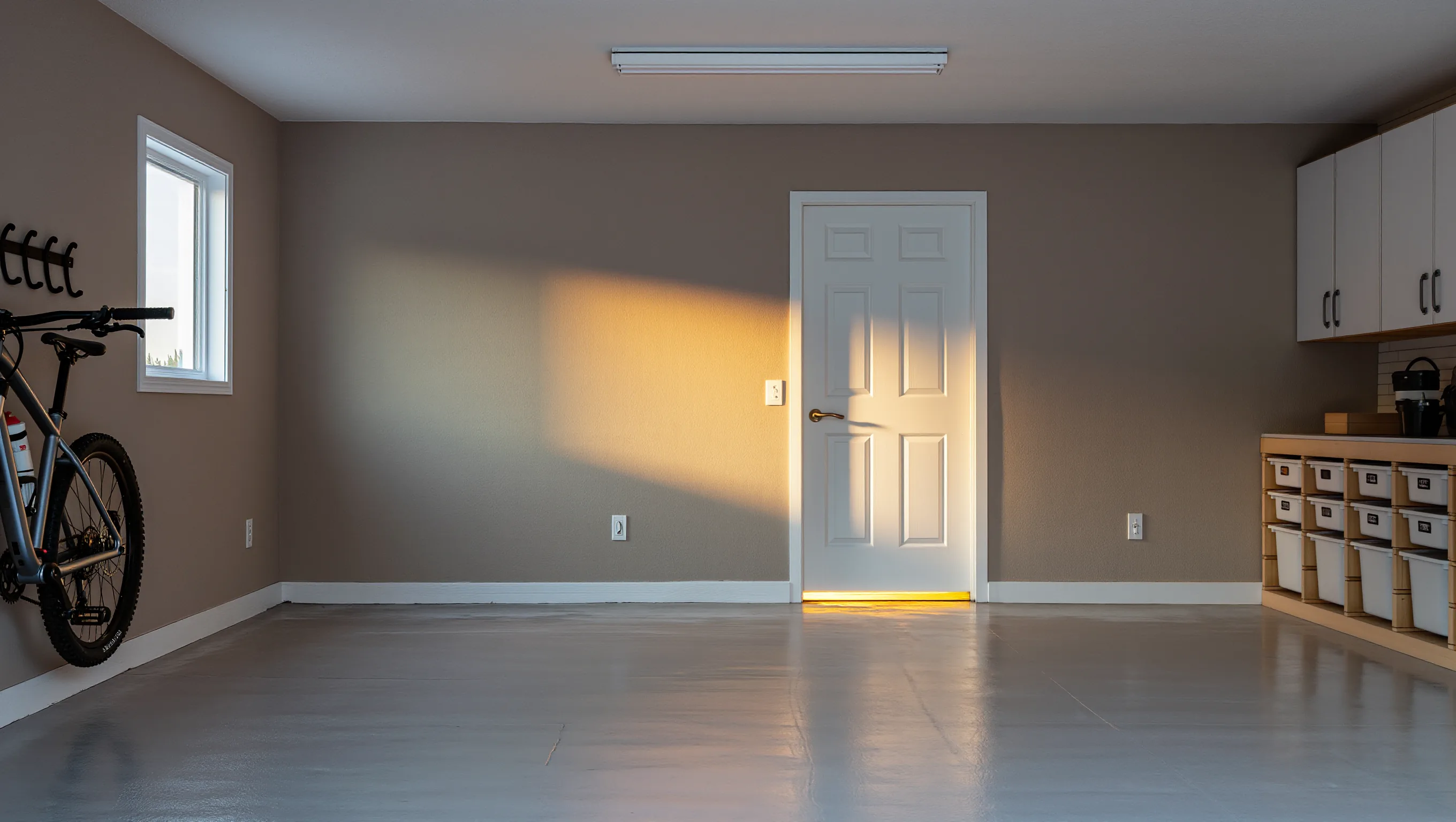
The front door accounts for a startling share, usually because it was unlocked, occasionally because a poorly fitted deadbolt in a soft frame will surrender to a single kick. But the door we find compromised more than any other in Texas houses is the one between the garage and the kitchen. It is a hollow-core interior door with a builder-grade knob lock, and it is treated as an interior door because a closed garage feels like part of the house. Get the overhead door up — which, with a coat hanger and thirty seconds of patience on a door with an exposed emergency release, is not difficult — and you are standing in a private, enclosed, soundproofed room with a lock a teenager could defeat.
A closed garage door is a wall until it is a door. The moment it opens, the least secure entrance in your house becomes the most private one in the neighborhood.
In newer subdivisions across Cibolo, Schertz and Converse — where nearly every home shares the same floor plan family — that garage-to-house door is essentially a regional vulnerability. Putting a contact on it and a tilt sensor on the overhead is the highest-value fifty dollars available to a homeowner in those zip codes, and it takes twenty minutes.
The eight-to-twelve minute rule
Once inside, the visit is short. Eight to twelve minutes is the range that shows up over and over, and it is bounded by nerve rather than by ambition. The route is predictable: master bedroom first, because that is where the jewelry, the cash, the watches and the firearms live. Nightstands, dresser drawers, closet shelves, and the underside of the mattress, in that order. Then a bathroom medicine cabinet for prescriptions. Then, if there is time, an office or a living room for laptops and small electronics.
Televisions are largely a myth now. They are enormous, they are cheap, and no one wants to carry a 65-inch panel across a lawn in daylight. What moves is small, dense and hard to trace.
That eight-to-twelve minute figure is also the reason monitored alarms work. Not because a siren frightens people — some it does, some it does not — but because the arithmetic of the visit collapses when a siren starts. Every second after that is spent by someone who now knows a countdown has begun and does not know how long it is. The overwhelming majority of the alarm events we respond to end with an empty house and an open door, because the person left within seconds of the horn.
What the calendar means for your system
If the risk is concentrated in weekday daylight, then the most important habit in home security is arming an empty house — which is precisely the habit most people never build, because arming feels like a bedtime ritual. Automation solves this better than discipline does. A system that arms itself on a schedule, or that notices the last phone has left the geofence and asks you once, will be armed on the Tuesday you were running late and thinking about something else.
If the entry point is a door rather than a window, then contacts on every exterior door — including the garage-to-house door, including the gate — matter more than blanketing the windows. If the visit is eight minutes long, then detection speed matters more than sensor count. And if the route runs straight to the master bedroom, then one motion detector placed on that path is worth three placed decoratively in rooms nobody would bother entering.
None of that requires an expensive system. It requires a system designed by somebody who walked the house. That is the whole argument, and we would make it even if it were less convenient for us.
Quick answers
- What time do most burglaries happen? +
- Between roughly 10 a.m. and 3 p.m. on weekdays, when houses on a residential street are most reliably empty. Overnight break-ins are the minority of events despite being the version everyone pictures.
- What month has the most break-ins in Texas? +
- July and August are consistently the peak, driven by open windows, propped doors, irregular household schedules and summer travel. A secondary rise occurs between late December and early January, tied to packages and visible new property.
- What is the most common point of entry? +
- A door, not a window. In Texas homes with attached garages, the hollow-core door between the garage and the house is the most frequently compromised opening we see, because it carries interior-grade hardware on what is functionally an exterior entrance.